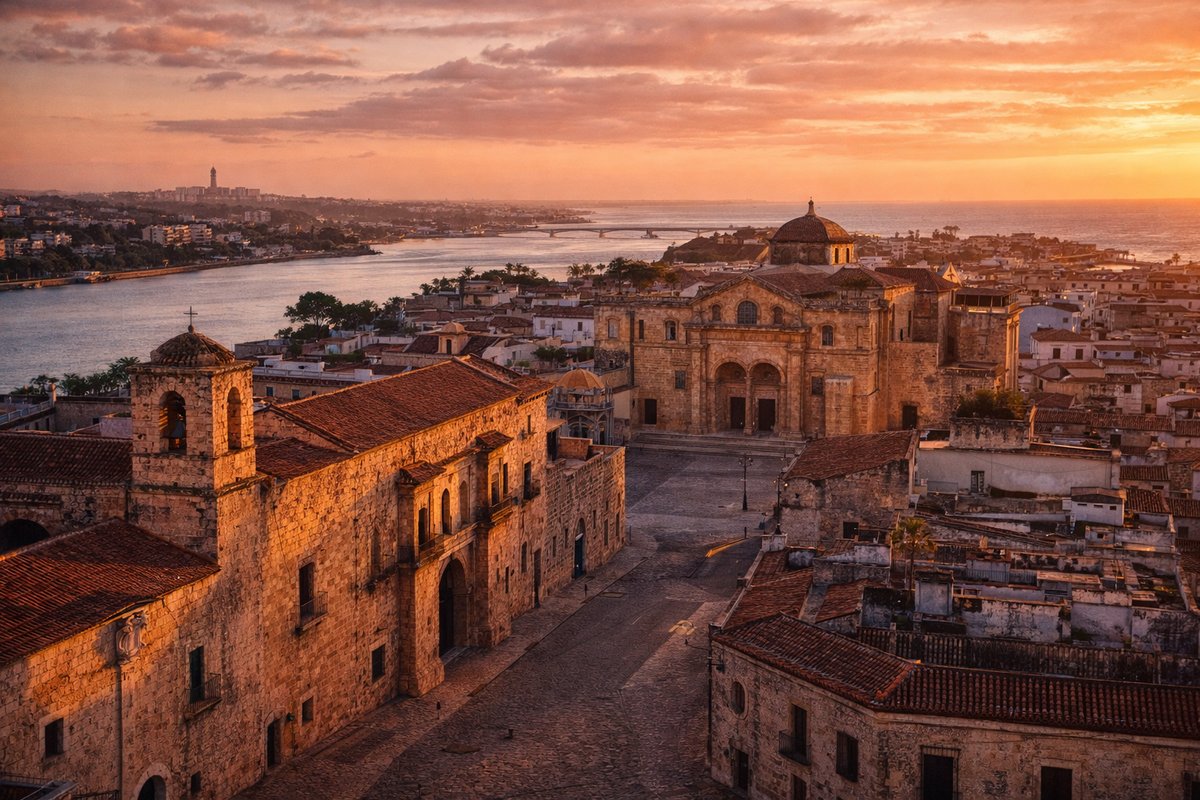
Santo Domingo Zona Colonial at golden hour — coral-stone colonial buildings, Catedral Primada, Caribbean coast
Dispatch · Nº 07
Founded · 1496
18.47° N · 69.89° W
República Dominicana / Distrito Nacional — Field Edition

Santo Domingo, the first city of the Americas.

A working field brief on the oldest continuously inhabited European city in the New World — which sectors earn your nights, why you don't need an all-inclusive, and the colonial-versus-modern math the resort marketing skips.

§ 01 · The lay of the land

A capital that predates the conquest.

Santo Domingo is what almost no one tells you when they sell you a Punta Cana package: an actual city. Three million people, the oldest cathedral, university, and fortress in the Americas, and a Caribbean coastline that the all-inclusives spent thirty years convincing tourists they had to fly past. The Zona Colonial — the original 1496 settlement — is a UNESCO district you can stay in, walk in, and leave from for the rest of the city.

Below: the four sectors I'd actually recommend, ranked by what kind of trip you're trying to have. The Zona Colonial for atmosphere, Piantini for modern comfort, Naco for the middle path, and Bella Vista for value.

§ 02 · Where to stay

Four sectors, main avenues only.

Maps show live inventory across Airbnb, Booking, Vrbo and Hotels.com. Outer barrios and the western highway sectors are deliberately not on this list.

File 02·A

Zona Colonial

Heritage Core · Walkable · $$

The atmospheric answer. Cobbled streets, coral-stone facades, the Catedral Primada, and a small-but-real boutique hotel scene inside the actual UNESCO district. Walk everywhere. Eat well at El Conde-adjacent terraces. The trade-off: it gets touristy and cruise-shippy in the morning, then quiet and residential by 7 pm. Absolutely the move for first-time visitors who want history, not beach.

See all stays in Zona Colonial →
File 02·B

Piantini

Upscale Modern · Business · $$$

Santo Domingo's polished modern district. Glass-tower hotels, fine dining along Av. Gustavo Mejía Ricart, security that doesn't quit, the city's wealthiest residential blocks. Safest neighborhood in the capital. Trade-off: zero charm and you'll Uber everywhere worth seeing. Stay here on business or if you want a soft landing without the colonial-quarter cobblestones.

See all stays in Piantini →
File 02·C

Naco

Residential · Middle Path · $$

The compromise. East of Piantini, west of the colonial zone — residential, mid-range hotels, decent restaurants, and a 10-minute Uber to either pole. Less polished than Piantini, more practical than the Zona Colonial for longer stays. The right call for travelers who want a base, not a vibe.

See all stays in Naco →
File 02·D

Bella Vista

Value · Local-Adjacent · $–$$

South-of-Piantini residential, walking distance to the Malecón. Real prices, real neighborhood feel, fewer English speakers. Stick to the avenues (Bolivar, Anacaona, Mirador Sur) and the area is fine; outer Bella Vista gets rougher. Best value-for-quality on this list if you're staying a week or more and want to live like locals.

See all stays in Bella Vista →
§ 02·x · Capital overview

The walkable third.

All four sectors pinned on one map. The center-east corridor is the part of Santo Domingo worth sleeping in.

Aggregated inventory · Airbnb · Booking · Vrbo · Hotels.com
§ 03 · Ground rules

Heat, water, and the apagón question.

Santo Domingo's risks are climate, infrastructure, and the gap between marketing and reality. Six rules that matter.

Rule 01

This is the Caribbean

Year-round 28–32°C, humid, and the sun is unrelenting between 11 and 3. Plan indoor or shaded activities mid-day. SPF 50, water bottle, hat. Locals don't fight the heat — they nap through it.

Rule 02

Apagón: power cuts happen

The grid is better than it was, but rolling outages still happen, especially in summer. Decent hotels have a planta (generator); cheap rentals don't always. Ask. Charge devices when you can.

Rule 03

Water is bottled, period

Tap is unsafe. Bottled or filtered only. Most Airbnbs have a botellón. Brush teeth with bottled too — every traveler who skips this regrets it.

Rule 04

Uber/InDrive over carros públicos

The shared-route carros públicos are how locals get around — cheap, hot, slow, and not for first-time visitors. Apps work everywhere in the central sectors and cost almost nothing in dollars.

Rule 05

Hurricane season is real

June through November. Most tropical storms pass north or west, but check the forecast before booking. The city handles weather better than the eastern resort coast does — small mercy.

Rule 06

Spanish, not English

The Zona Colonial and Piantini have English in the tourist-facing hotels and restaurants. Outside that, you're in Spanish — and Dominican Spanish at speed. Learn basics, accept the local accent will humble you.

§ 04 · Further dispatches

The Briefing.

Longer field notes, sector-by-sector deep reads, the Malecón nightlife map, day-trip logistics to Samaná and Las Terrenas, and the honest "should you skip the resort" math.

Read the briefing →